The Handoff Is the Hard Part: What Customers Should Never Have to Repeat
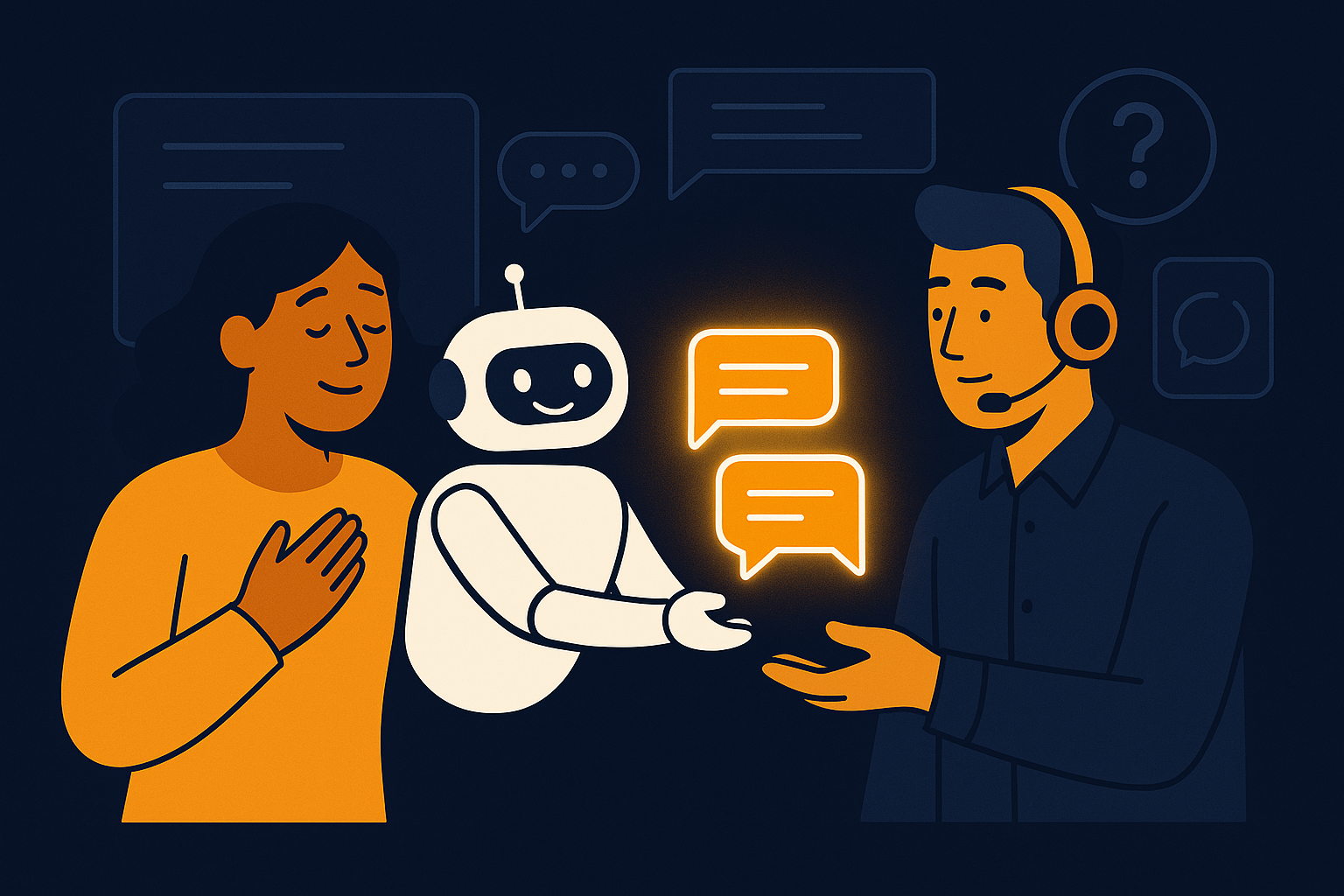
Imagine reaching out to customer support expecting quick assistance, but instead, you find yourself repeating the same problem details multiple times to different agents. This common frustration often stems from handoffs where previous conversation context is lost. In support environments, the transition between AI and human agents—the handoff—is a critical moment that can either enhance or degrade the customer experience. Ensuring that customers never have to repeat themselves during this handoff can save time, reduce frustration, and improve satisfaction.
Why the Handoff Challenges Customer Experience
The handoff between AI and human support agents is notoriously difficult because it risks losing the full conversation context. When a customer interacts initially with an AI chatbot or automated system, much of their issue and interaction history is captured digitally. However, if the handoff to a human agent is not carefully managed, this valuable context may not be fully transferred. Customers then face the frustrating task of reiterating their problem from scratch. This not only wastes their time but also increases the cognitive load, often escalating dissatisfaction.
A practical example is when a customer starts a chat about a billing issue with an AI bot that can handle routine queries. If the bot detects a complication requiring human review but fails to pass the billing history and chat transcript, the human agent must ask the customer to explain the entire problem again. This disconnect erodes trust and prolongs resolution times. It's a common mistake companies make by relying on disconnected support tools that don't share conversation data efficiently.
Human handoff that preserves the entire conversation context allows your support team to pick up where the AI left off without gaps. This continuity does more than just save time: it builds trust by showing customers their concerns are understood and respected. Moreover, it empowers human agents with complete background information, enabling faster and more accurate resolution of issues.
How AItocha CX Ensures Smooth Human Handoff
AItocha CX addresses the handoff challenge by maintaining full conversation context during transitions from AI to human agents. This means that your team can review all previous messages, queries, and relevant metadata without missing a beat. Unlike many systems where conversation fragments disappear or require manual summary, AItocha CX retains a comprehensive dialogue history accessible at the moment of handoff.
In practice, this looks like a human agent receiving a conversation thread with all previous AI interactions clearly displayed, including the customer's questions, AI responses, and any flagged issues. The agent can quickly understand the case and respond without redundant questions. This context also allows the agent to personalize the interaction based on what the customer has already shared, enhancing the overall experience.
This approach streamlines the support workflow, reducing time spent onboarding the human agent to the case and eliminating redundant questioning. For your customers, it translates into a more fluid and respectful experience, as they can trust that their issue has been fully understood even if they interact with multiple support layers.
The Impact of Context Preservation on Support Efficiency
Preserving full conversation context during handoff not only benefits customers but also drives operational efficiency for your support team. Agents equipped with complete case histories can diagnose problems faster and avoid duplicative effort. This reduces average handle times and frees up resources to address more issues or complex cases.
Consider a scenario where an AI bot has gathered preliminary troubleshooting steps from a customer. When the case escalates, the human agent can immediately see what has been tried and focus on deeper solutions rather than starting from scratch. This efficient use of time allows your team to manage higher volumes without compromising quality.
Additionally, when agents do not have to ask customers to repeat information, they can focus on delivering personalized solutions and building rapport. This can lead to higher customer satisfaction scores and lower churn. Overall, context preservation enhances both the qualitative and quantitative aspects of your support operations.
Practical Steps to Avoid Customer Repetition During Handoff
To minimize customer repetition, your team should implement clear protocols and technology features that ensure handoff transparency. Here are key practices:
- Use support tools that automatically transfer complete conversation histories between AI and human agents
- Train agents to review the conversation context before responding to the customer
- Enable customers to see that their information is retained and understood to reduce their anxiety
- Integrate ticketing systems so that all relevant data is centralized and accessible
- Monitor handoff quality regularly and gather customer feedback on their experience
For example, enabling agents to access a chat transcript before joining a live conversation allows them to prepare and anticipate customer needs. Training is equally important: agents should know how to verify the conversation history with the customer and confirm understanding without forcing redundant explanations. When customers see their information is valued and preserved, their confidence in your support team grows.
By following these steps, you make the handoff phase less of a dreaded bottleneck and more of a natural continuation of the support journey. The human touch, coupled with intelligent context management, becomes a strength instead of a source of friction.
Why Customers Expect Not to Repeat Themselves
In an era where personalization and efficiency are expected norms, customers assume that support teams remember their issue details no matter who they speak with. Repetition feels like a failure of the support system to respect the customer’s time and trust. It can quickly sour the relationship and lead customers to seek alternatives.
For instance, if a customer has emailed support and then calls the hotline, they expect the agent to be aware of the previous interaction. Having to repeat details multiple times can make the customer feel ignored or devalued, potentially damaging brand reputation. This expectation is heightened in industries with complex products or services where issue resolution often involves multiple touchpoints.
By ensuring that customers never have to repeat themselves during handoffs, you uphold a standard of care that customers appreciate deeply. This expectation is not just about convenience; it signals professionalism and attentiveness. Implementing systems like AItocha CX that keep full conversation context intact helps your team meet this expectation consistently and build stronger customer loyalty.
If you want to explore how your support team can deliver this smooth, context-rich handoff experience, visit the product page to learn more about AItocha CX’s capabilities and integrations.
Ultimately, the handoff is the hard part—but it doesn’t have to be a source of frustration. With the right tools and processes, you can make sure your customers’ voices are heard once, thoroughly, and carried forward until their issues are resolved.