Balancing AI Voice Support and Human Expertise: Where Automation Ends and People Begin
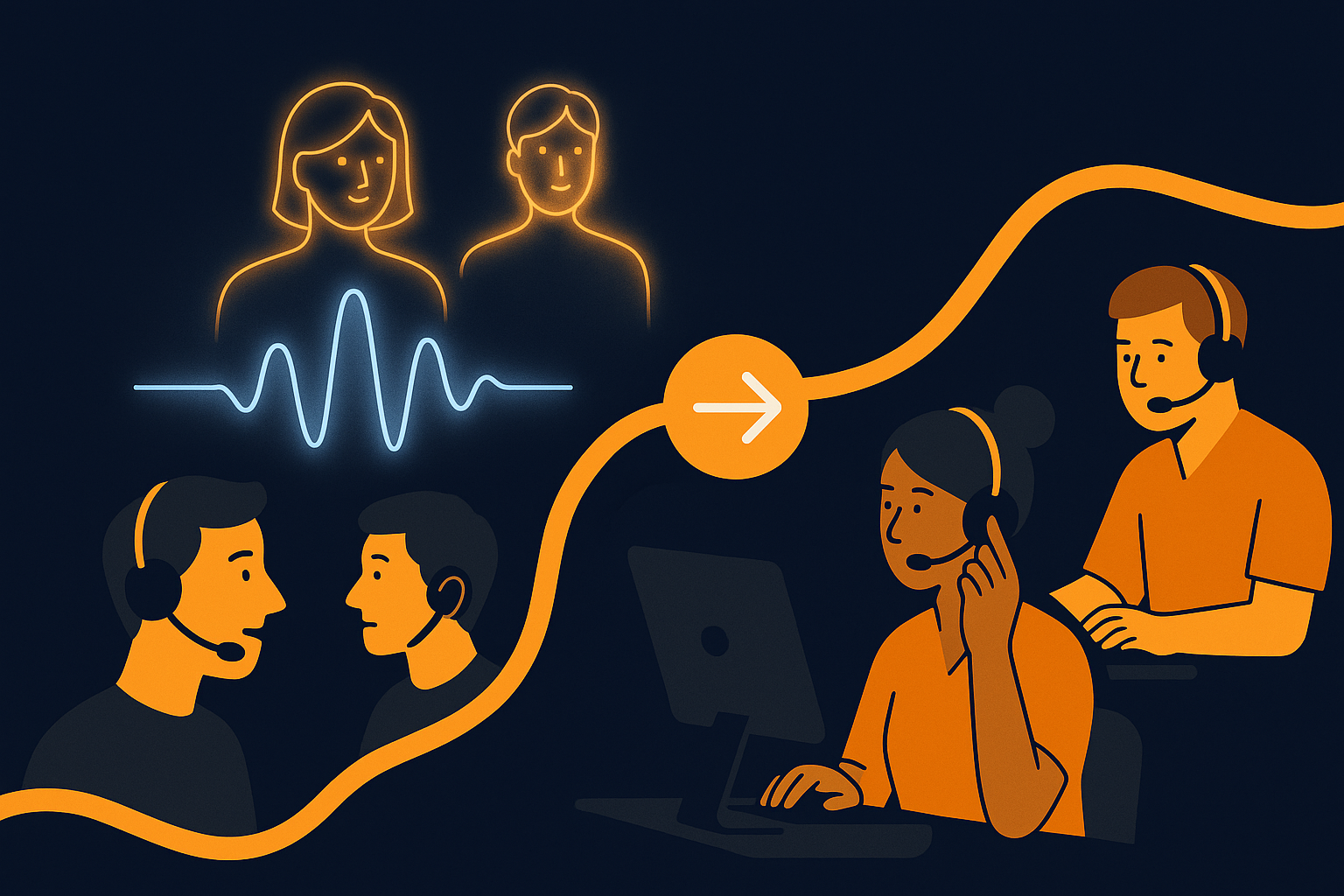
Imagine calling a company's support line and instantly getting clear answers to your questions without waiting on hold. AI voice technology has made this possible by handling straightforward inquiries efficiently. However, when conversations grow complex or sensitive, a human agent often needs to take over to address the nuances a machine can't grasp. This balance between AI voice support and human intervention is critical to delivering excellent customer service today.
What AI Voice Support Does Well
AI voice support excels in handling routine tasks like providing account balances, answering common questions, or processing simple transactions. By managing these repetitive interactions, it reduces wait times and frees up human agents for more complex issues. The technology uses natural language processing to understand caller intent and respond promptly, which helps maintain customer satisfaction in high-volume environments.
Additionally, AI voice systems can operate 24/7 without fatigue, ensuring customers receive support outside of typical business hours. This continuous availability is a significant advantage for global companies or those with limited staff. Furthermore, AI can collect preliminary information during calls, such as verifying identity or issue details, so human agents receive well-prepared handoffs that streamline the resolution process. For example, a customer calling to check their order status can receive instant updates via AI without waiting for an agent, which improves response speed and overall efficiency.
Why Human Agents Remain Essential
Despite these strengths, AI voice support isn’t equipped to handle every situation. Complex problems, emotional conversations, or requests requiring judgment calls demand human empathy and critical thinking. When AI encounters ambiguous input or detects frustration, it should promptly transfer the call to a live agent to prevent customer dissatisfaction. A common mistake is overloading AI with scenarios it cannot yet reliably resolve, which leads to poor customer experiences and erodes trust.
Human agents also excel at adapting to unexpected scenarios, using their experience to ask clarifying questions or offer personalized solutions. They can build rapport and trust in ways AI currently cannot, which is especially important in industries like healthcare, finance, or legal services where nuanced understanding is crucial. For instance, when a customer is upset about a billing error, a human agent can convey empathy and negotiate solutions that an AI might not be programmed to offer.
The Challenge of Live Agent Handoff
A key feature of effective AI voice support is the live agent handoff — the moment the system transfers a caller to a human agent. This transition must be smooth to avoid forcing the customer to repeat information or experience delays. If handled poorly, it negates the efficiency gains of AI and frustrates users. In practice, customers often report frustration when they must repeat their issue multiple times after the handoff, which can damage brand perception.
Implementing a reliable handoff requires the AI to capture and pass on relevant context, such as previous interactions, the specific issue, and any preliminary data collected. This ensures the human agent can pick up the conversation smoothly. AItocha CX, for example, is designed with this handoff capability in mind, helping your team maintain a high-quality customer experience without interruptions. Ensuring that integration with agent desktops and CRM systems is robust is critical for this context transfer to work effectively.
Designing for Collaborative Support Success
To optimize AI voice support, organizations should clearly define which interactions the AI will handle and establish criteria for escalation to humans. This division of labor maximizes efficiency while preserving service quality. Training AI models with relevant data and continuously monitoring performance are also critical steps to refine responses and handoff triggers. Establishing feedback loops where agents can flag AI shortcomings helps improve the system over time.
Equipping human agents with real-time information from AI can further enhance collaboration. When agents receive detailed context upon handoff, they can resolve issues faster and reduce customer effort. This blended approach leverages the strengths of both AI and people to create a more responsive and empathetic support system. For example, a call center might implement dashboards displaying AI-collected data so agents can tailor their responses immediately upon taking over.
Common Pitfalls and How to Avoid Them
Even the best AI voice systems face challenges if not carefully implemented. One common pitfall is setting AI to handle overly complex queries without proper fallback mechanisms, resulting in frustrated customers stuck in automated loops. Another is failing to train AI on diverse accents or speech patterns, which can cause misunderstandings and incorrect responses.
To avoid these issues, continuously test AI voice performance across real-world scenarios and monitor customer feedback closely. Establish clear thresholds for escalating to live agents and ensure agents are empowered to override AI when necessary. Regular updates to knowledge bases and AI training data are essential to keep pace with product or service changes. Taking these steps helps maintain a balance where AI handles routine tasks while humans manage the nuanced interactions.
Planning Your AI Voice Support Strategy with AItocha CX
When considering AI voice for your support team, it’s important to evaluate how the technology fits within your existing workflows and where human agents will intervene. AItocha CX offers a system that integrates AI voice with live agent handoff capabilities, allowing you to deploy automation confidently without sacrificing personal touch. For more details, visit the CX product page to understand how this balance can be tailored to your needs. A thoughtful rollout includes training both AI and human teams to collaborate effectively and monitoring the impact on your key support metrics over time.
Remember, the goal is not to replace your human agents but to empower them by offloading routine tasks and providing them with rich context. This approach supports better customer experiences and more sustainable workloads for your team, ensuring your support remains effective as demands evolve. By blending AI voice assistance with skilled human support, you can create a support system that is both efficient and empathetic, meeting diverse customer needs.