Why Filtering Review Requests Harms Your Business and How to Collect Feedback Properly
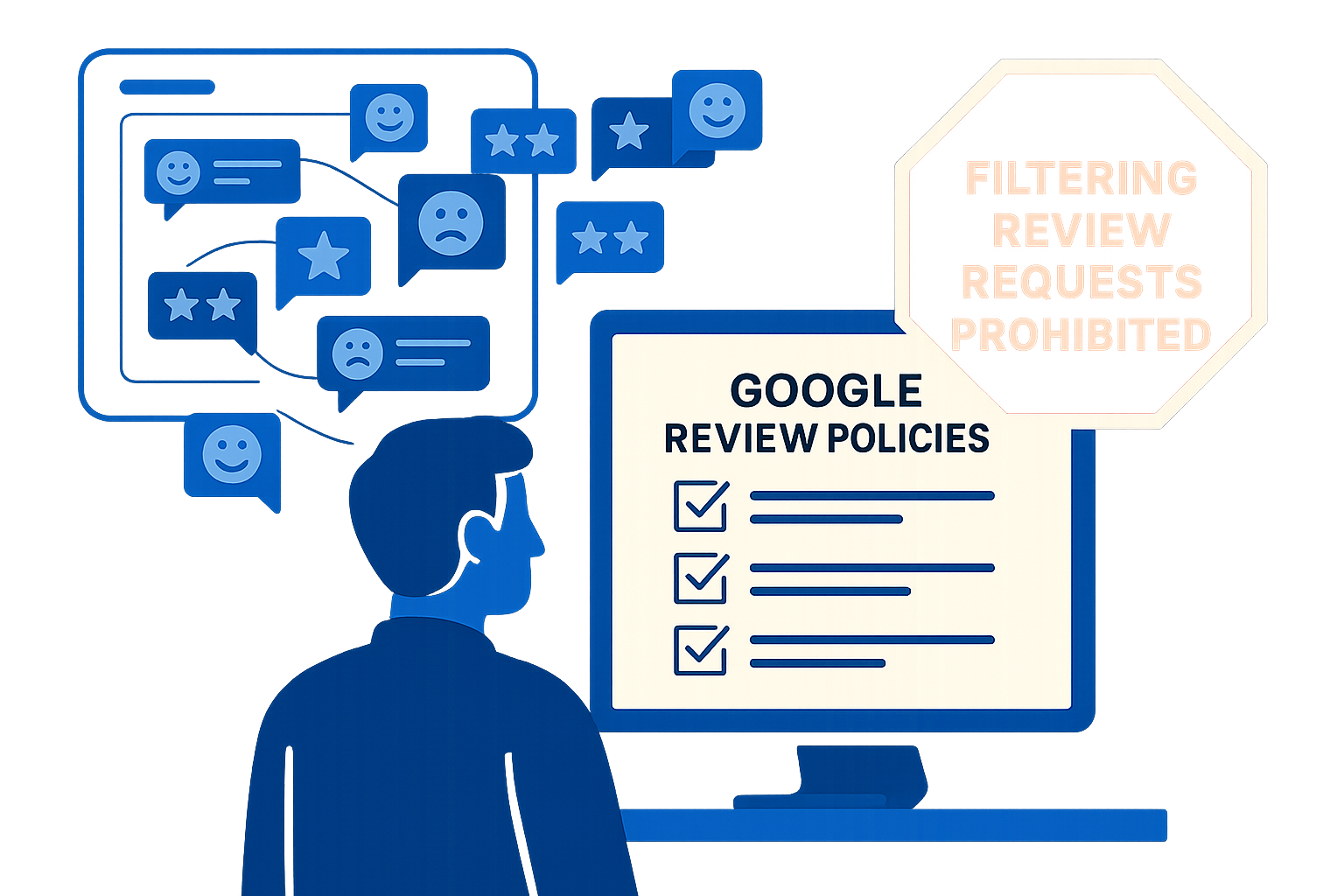
Imagine a scenario where your team only invites customers who left positive feedback to publicly share their experience. While this might seem like a way to boost your ratings, selectively filtering who is invited to review is not allowed by Google. Such practices risk penalties and may damage your business’s credibility. Understanding the proper approach to inviting reviews is essential to maintain trust and comply with platform policies.
Why Selective Invitations for Public Reviews Are Not Allowed
Some businesses attempt to improve their online image by asking only satisfied customers to leave public reviews, while addressing negative feedback privately. However, Google’s policies require inviting every customer to provide a review, regardless of their experience. This means you cannot filter or restrict who receives an invitation based on the rating they gave or the sentiment they expressed in feedback.
The reasoning behind this is to maintain transparency and fairness in online reviews, giving prospective customers a balanced view of a business’s performance. If you selectively invite reviewers, you risk creating a misleading impression, which can lead to penalties, reduced visibility, or removal of reviews from Google. Complying with these rules protects your reputation and builds long-term trust.
How AItocha Surveys Supports Honest and Policy-Compliant Review Collection
With AItocha Surveys, your team invites all respondents to leave a public review, no matter their rating. There is no filtering based on star ratings or sentiment; every customer who completes a survey and opts in receives an invitation to share their opinion publicly. This approach complies with Google’s and other platforms’ guidelines and helps ensure the integrity of your review collection.
In parallel, AItocha Surveys provides low-rating alerts that notify your team privately when a customer expresses dissatisfaction. These alerts enable you to address issues promptly behind the scenes, improving customer satisfaction without interfering with who is invited to post a public review. This separation between private issue resolution and public review invitations aligns with ethical practices and platform policies.
The Importance of Inviting Everyone and Avoiding Filtering Practices
Filtering review invitations by rating or sentiment creates an incomplete and biased picture of your business online. Google and the FTC emphasize transparency, requiring businesses to ask every customer to provide reviews openly. Attempting to filter or gate review requests violates these policies and can result in severe consequences, such as removal of reviews or restrictions on your business profile.
Additionally, platforms like Yelp prohibit soliciting reviews altogether, so they are never a supported destination for review invitations. When choosing where to request reviews, focus on platforms that explicitly support review requests, such as Google, Facebook, TripAdvisor, Trustpilot, G2, and Capterra. This ensures your efforts are both effective and compliant.
Best Practices to Collect Reviews Without Selective Invitations
To build a genuine and trustworthy online reputation, follow these best practices when collecting feedback and reviews:
- Invite every customer who completes a transaction or interaction to leave a review, without applying any rating filter.
- Use automatic rating-based scoring to organize feedback internally, but never to decide who receives a review invitation.
- Set up internal alerts for low ratings to address dissatisfied customers privately and improve your service.
- Send review requests only to supported platforms: Google, Facebook, TripAdvisor, Trustpilot, G2, and Capterra.
- Avoid any practices that prevent customers from posting reviews regardless of their feedback.
Following these guidelines helps you gather authentic reviews that reflect the true experience of your customers. For example, a customer who had a problem is alerted to your team via an internal notification, enabling a personal resolution. Meanwhile, this customer still receives an invitation to share their honest review, contributing to a transparent public profile.
Integrating Honest Review Collection Into Your Daily Workflow
Getting started with AItocha Surveys, you can configure survey invitations to include every respondent by default, without any filtering. Enable low-rating alerts to keep your team informed and responsive to feedback that needs attention. This creates a balanced system where public reviews are collected fairly, and internal improvements are made proactively.
This transparent approach to review collection not only helps you comply with Google’s policies but also fosters trust with your customers. When potential clients see your openness to all feedback, positive or negative, it builds confidence in your brand. Over time, this honesty can lead to stronger customer relationships and a more resilient online reputation.