Why Both First-Response Time and Resolution Rate Matter in Customer Support
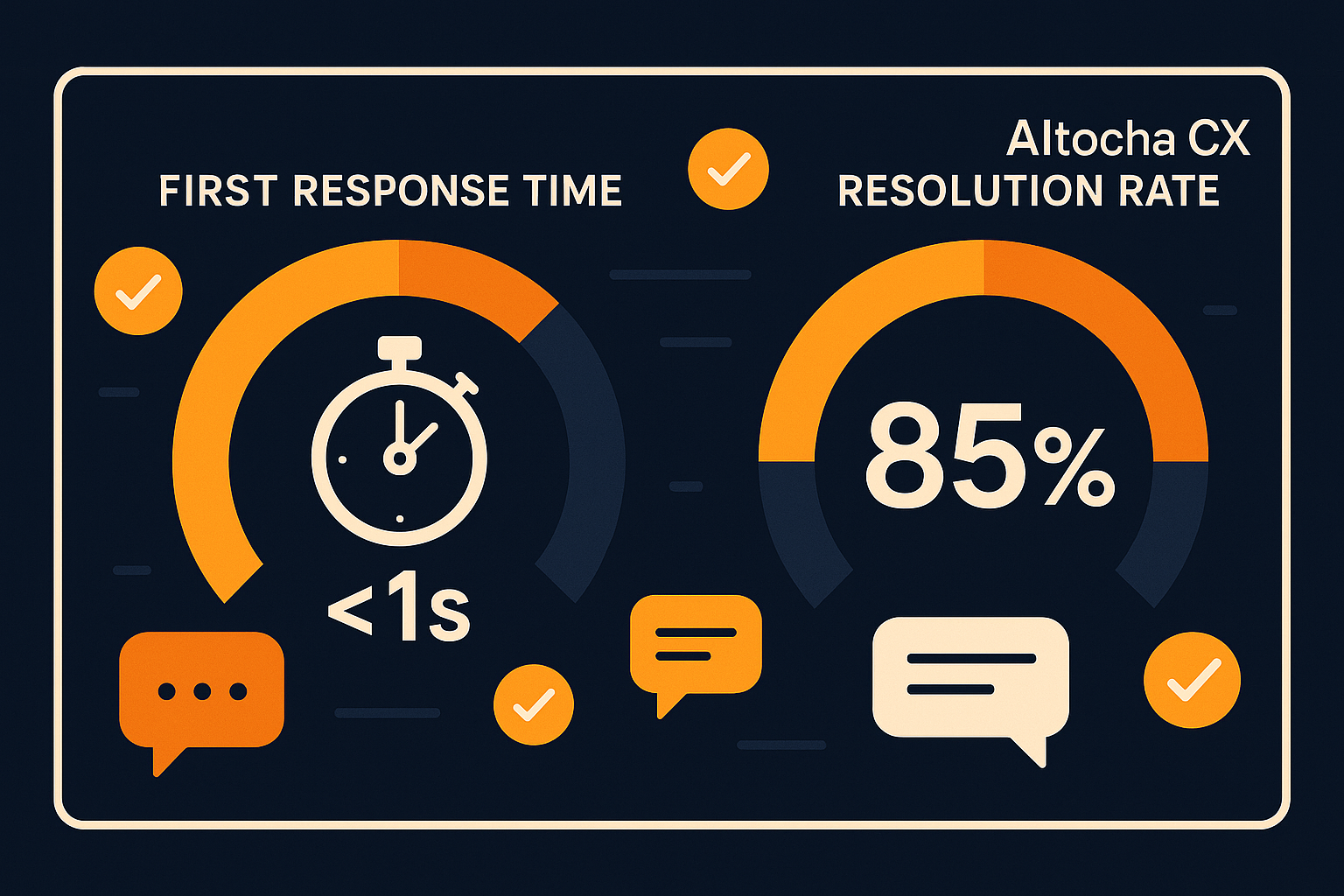
Imagine a support team responding to customer inquiries in less than a second on average while resolving 85% of those queries automatically. This combination of speed and effectiveness is rare yet crucial. Understanding the distinct roles of first-response time and resolution rate can help you optimize your support operations. Both metrics measure different aspects of customer care, and prioritizing one without the other may leave gaps in your service quality.
First-Response Time: Why Speed Sets Expectations
First-response time reflects how quickly your team acknowledges a customer’s inquiry. A response within seconds signals attentiveness and respect, reducing customer anxiety and limiting frustration. For example, AItocha CX averages less than one second for first response, setting a high bar for responsiveness. When customers see rapid replies, they feel valued and understood, which contributes to a positive support experience.
However, speed alone isn’t enough. If the initial reply is fast but unhelpful, customers will remain dissatisfied. First-response time sets the tone but doesn’t guarantee problem resolution. It’s the first step in a series of interactions that build trust and satisfaction.
For instance, imagine a customer reaching out about a billing question. A reply within a second confirms their message was received, but if the response simply says "We received your inquiry," without providing any helpful direction, the customer will need to wait longer for actual resolution. The key is to combine rapid acknowledgment with meaningful content when possible, which AItocha CX facilitates through AI-powered instant replies.
Resolution Rate: The Measure of Effective Support
Resolution rate gauges how many inquiries your system or agents successfully close without further intervention. It’s a critical indicator of support quality. AItocha CX achieves an automatic resolution rate of 85%, meaning most questions are handled without escalating to a human agent. This not only improves customer satisfaction by providing answers promptly but also helps your team focus on complex issues.
A high resolution rate reduces repeat contacts and keeps customers from feeling stuck in a prolonged support loop. It signals that your support system isn’t just fast but also effective in solving problems, which enhances overall loyalty.
Take a typical scenario where a customer asks about order tracking. If AItocha CX can automatically provide the latest shipment status without manual input, the customer’s issue is resolved immediately. This cuts down on waiting times and prevents the need for follow-ups, which often frustrate users and increase operational costs.
Balancing Speed and Quality: Why Both Metrics Matter
Focusing solely on first-response time can lead to rushed, superficial replies that fail to resolve issues. Conversely, emphasizing resolution rate without prompt replies risks customers feeling ignored. Both metrics serve complementary purposes—speed builds initial confidence, while resolution ensures lasting satisfaction.
To optimize support, you need systems that respond quickly and deliver accurate answers. AItocha CX is designed to excel at both, ensuring customers don’t wait long for acknowledgment and typically receive solutions automatically.
For example, a chatbot that instantly replies with "Thanks for reaching out" might score well on first-response time but score poorly on resolution if it cannot self-serve customers’ needs. On the other hand, a system that takes several minutes to respond but eventually resolves all issues may frustrate users due to the initial delay. Balancing these metrics avoids such pitfalls.
How AItocha CX Supports Both Metrics Effectively
AItocha CX leverages AI-driven automation to achieve sub-second first responses by instantly recognizing and engaging with customer inquiries. This rapid acknowledgment reduces wait times dramatically compared to traditional support models.
Simultaneously, its advanced knowledge base capabilities and conversational AI resolve about 85% of inquiries automatically. This dual focus means your customers experience immediate engagement and generally walk away with their issues solved, increasing satisfaction and reducing workload for live agents.
If the AI cannot resolve a conversation, it hands off smoothly to your team, ensuring no customer is left without support. This balance keeps your support both fast and effective.
Moreover, AItocha CX’s ability to integrate across multiple support channels means customers receive consistent response times and resolutions whether they contact you via chat, email, or social messaging. This omnichannel approach prevents delays and confusion during handoffs, enhancing both metrics further.
Practical Steps to Monitor and Improve Both Metrics
To get the most from your support system, track first-response time and resolution rate as distinct KPIs. For example, monitor how quickly your AItocha CX-powered system replies and what percentage of inquiries it resolves automatically. These metrics can highlight bottlenecks or gaps.
- Set alerts when first-response time exceeds your target threshold to prevent slow acknowledgments.
- Analyze unresolved tickets to identify common issues that AI cannot yet handle automatically.
- Regularly update your knowledge base to improve AI resolution capabilities.
- Train human agents to take over smoothly when AI hands off conversations.
By treating these metrics as complementary rather than interchangeable, you can fine-tune your system to deliver both rapid and effective customer support. For a deeper dive into how AItocha CX manages these aspects, visit the CX product page.
Ultimately, balancing first-response time and resolution rate means your customers are not only acknowledged instantly but also leave their support interactions satisfied with real solutions. This dual focus is essential for building trust and loyalty in your brand.