What SLA Tracking Actually Catches That Manual Monitoring Misses
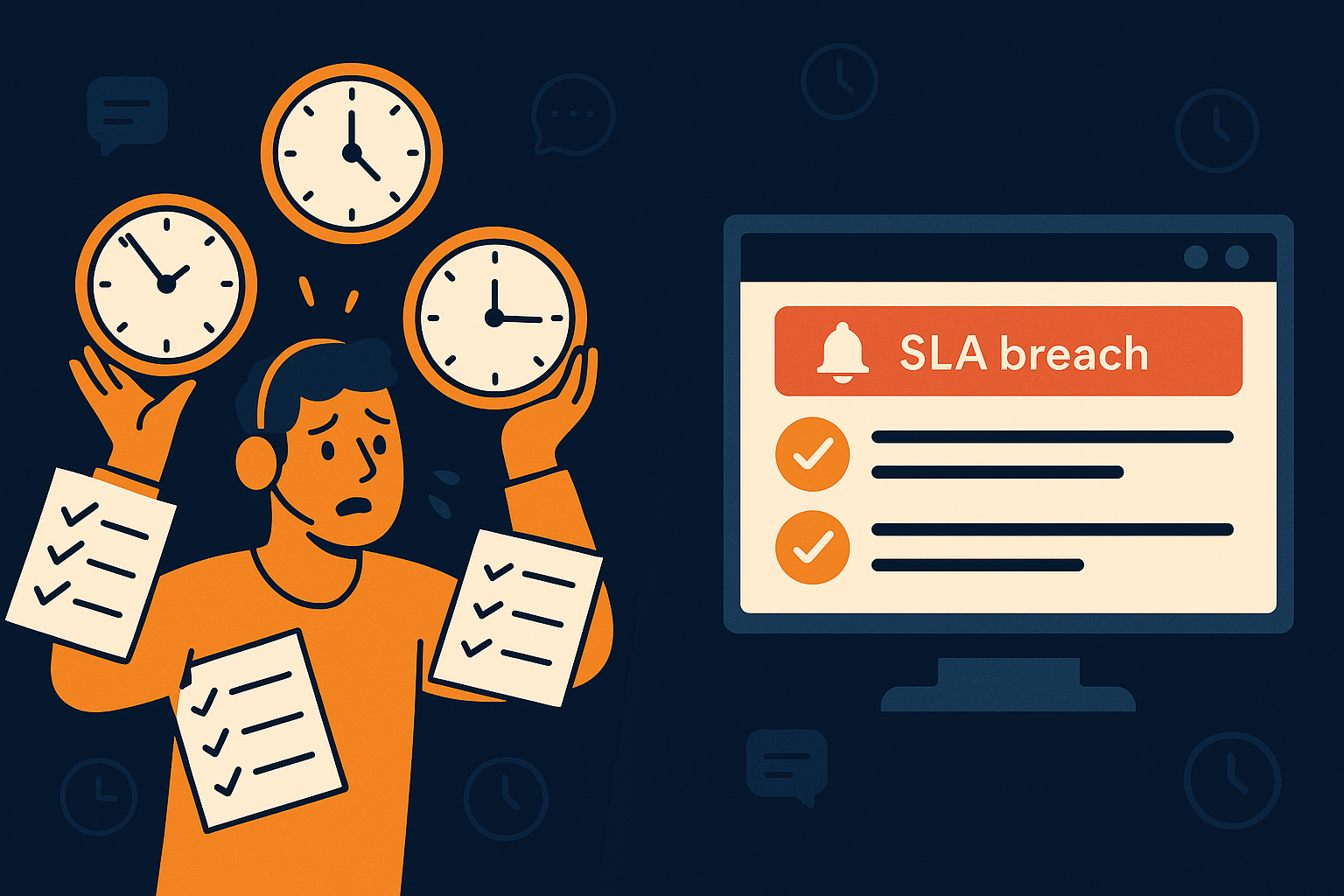
Imagine this: your support team handles hundreds of customer requests daily across multiple channels. In the chaos, a few tickets slip past the promised response time, but no one notices until customers start complaining. How many of those missed deadlines could you have caught earlier if you weren't relying solely on manual checks?
The Limits of Manual SLA Monitoring
Manual monitoring of service level agreements (SLAs) often involves support agents or managers reviewing spreadsheets, timestamp logs, or ticket queues to ensure responses happen within agreed timeframes. While this approach might work in low-volume environments, as soon as requests multiply, the challenges become glaring:
- Human error and oversight increase with volume and complexity.
- Time spent checking tickets detracts from actual problem-solving.
- Delayed detection of SLA breaches leads to customer dissatisfaction.
- Lack of real-time visibility limits proactive responses.
In short, manual systems can only catch SLA breaches after the fact, often when it's too late to make a good impression. This reactive nature damages customer trust and can inflate operational costs with escalations and overtime work.
How Automated SLA Tracking Changes the Game
Automated SLA tracking equipped with breach alerts transforms your ability to monitor and meet service commitments. Instead of relying on periodic manual reviews, you get continuous, real-time oversight that highlights potential violations as they approach or occur.
Consider the advantages automated tracking provides:
- Immediate breach alerts notify your team the moment a ticket risks being late.
- Prioritization becomes data-driven, focusing attention where it's most urgent.
- Historical reporting identifies patterns and bottlenecks to improve processes.
- Less time spent on manual checks means more time delivering quality support.
For example, if a support request is approaching its response deadline, the system can trigger a warning before the breach happens, giving your team a chance to act proactively. This kind of anticipation is nearly impossible with manual methods.
What SLA Tracking Catches That Manual Oversight Misses
Automated SLA tracking with breach alerts catches subtle yet critical issues that manual monitoring often misses:
- Tickets slipping through the cracks amid high volume periods.
- Delays caused by agent handoffs or unclear ownership.
- Trends in slow response times on specific channels or issue types.
- Exceptions due to special cases that get overlooked in bulk reviews.
Because the system continuously monitors every ticket against SLA rules, no breach goes unnoticed. In contrast, a human reviewer might miss tickets buried deep in queues or delayed slightly beyond acceptable windows, especially during busy shifts.
Moreover, automated breach alerts make it easier to enforce accountability by clearly highlighting when and where service commitments fail. This transparency supports targeted training and operational improvements, which manual processes may not reveal with the same clarity.
Getting Started with Automated SLA Tracking
If you’re considering automated SLA tracking, tools like AItocha CX offer integrated breach alert capabilities designed to help your team stay on top of commitments without extra manual effort.
Start by defining clear SLA rules that align with your customers’ expectations and your operational capacities. Then, configure breach alerts to notify the right team members through your preferred channels—be it email, chat, or direct dashboard notifications.
By embedding automated SLA tracking into your workflow, you shift from a reactive to a proactive support model. Your team can focus on resolving issues faster, informed by real-time insights into SLA performance.
Final Thoughts: Why Automation Matters for SLA Success
While manual monitoring might feel familiar or straightforward, it simply can’t scale with the speed and volume of modern customer service demands. Automated SLA tracking with breach alerts fills that gap, providing precision, speed, and visibility.
The result: fewer missed deadlines, improved customer satisfaction, and smarter allocation of your team’s time and energy. Investing in these tools is a practical step toward reliable, measurable service excellence.