What Actually Separates a Good NPS Program from a Bad One
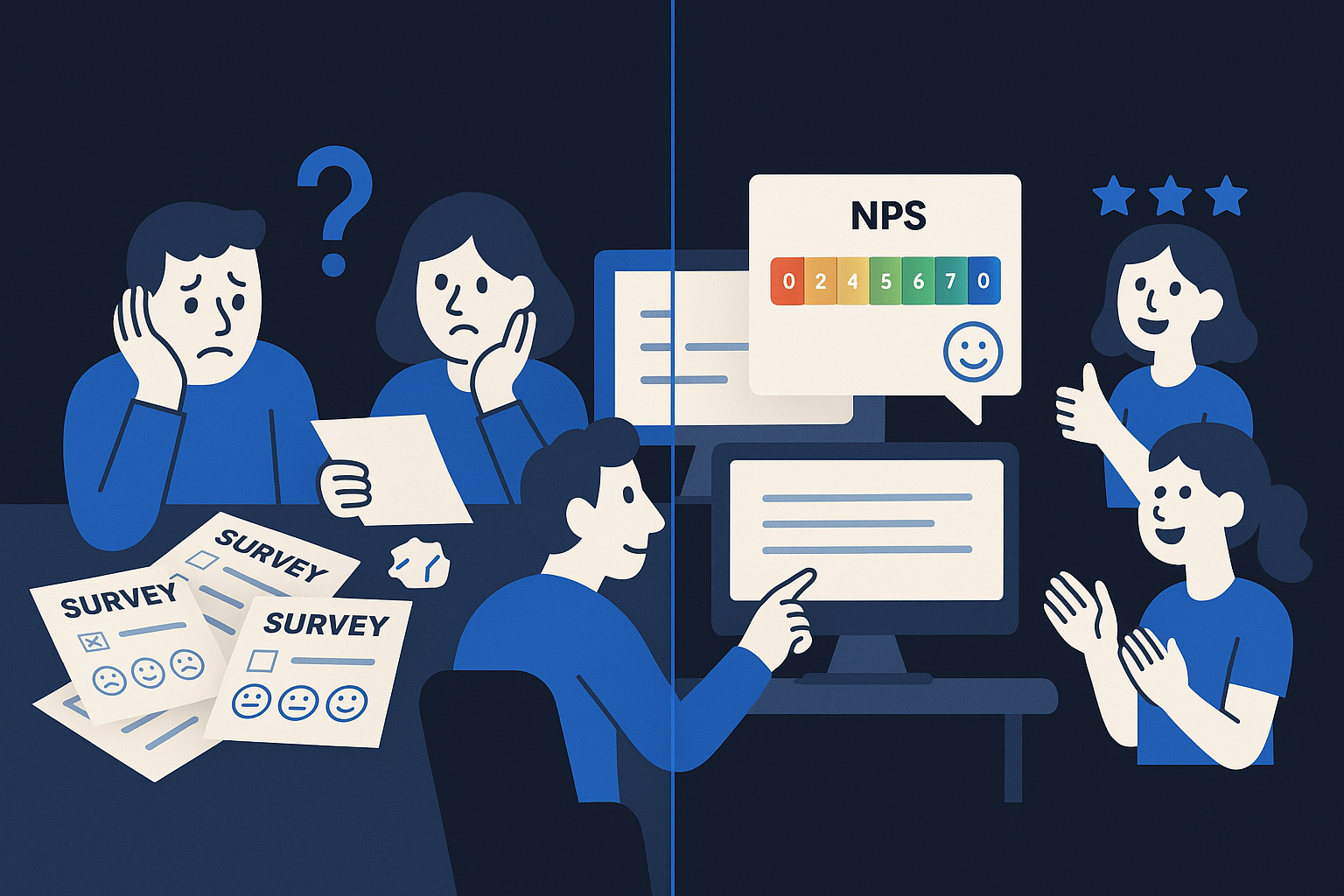
Imagine launching an NPS survey and receiving a flood of responses—but the insights you get feel scattered and hard to act on. What separates a good NPS program from one that just collects data without driving real improvements? The answer lies in thoughtful survey design, clear scoring, and a feedback workflow that your team can trust and use. This article breaks down the essential elements that make an NPS program truly effective, helping your business turn customer sentiment into actionable growth.
Choosing the Right NPS Survey Type for Your Business Needs
Not all NPS surveys are created equal. The survey type you choose can determine how actionable your data becomes. For instance, AItocha Surveys offers a specialized NPS survey type that simplifies response collection by focusing on a clear, consistent rating scale followed by open feedback prompts. This structure encourages honest responses and helps avoid confusion that can come from overly complex surveys.
When you align your survey type with your business model and customer journey, you increase the chance of meaningful participation. For example, post-service NPS surveys work well for service industries, while product-based businesses might time their surveys after key usage milestones. The key is to keep the survey short and focused—typically the classic NPS question plus one or two follow-ups—to respect your customers' time.
A common mistake is trying to add too many questions or branching logic, which can overwhelm respondents and reduce completion rates. Instead, focus on the essential question, "How likely are you to recommend us?" with a simple numeric scale, then optionally ask for a reason. This minimal approach improves response rates and quality, giving you clearer insight into customer sentiment.
Why Transparent, Rating-Based Scoring Matters
A common pitfall in NPS programs is overcomplicating how responses are scored or categorized. Some platforms promote AI-driven sentiment analysis, but effective NPS scoring is actually quite straightforward: responses are grouped automatically based on their rating, such as 9–10 being promoters, 7–8 passives, and 0–6 detractors. This rating-based approach maintains transparency and makes it easier for your team to interpret results without guessing how scores were derived.
Using a simple, automatic scoring method also helps maintain consistency across multiple surveys and time periods. Your team can quickly spot trends, identify problem areas, and segment feedback by customer type or product line. This clarity is critical for turning raw data into informed decisions rather than overwhelming your team with ambiguous metrics.
For example, if your support department notices a spike in detractor responses after a recent product update, the clear numeric breakdown helps pinpoint the timing and severity of the issue. Without transparent scoring, such actionable insights become difficult to extract, delaying your response and frustrating customers further.
The Importance of Inviting All Respondents Without Filtering
Some businesses mistakenly think they should only invite customers with high scores to leave public reviews, aiming to highlight positive feedback. However, this practice conflicts with Google's policies and FTC guidance, which require that all respondents who opt in have equal opportunity to submit reviews, regardless of their rating. AItocha Surveys strictly follows this guideline by inviting every respondent to leave a review without gating or filtering based on their score.
Inviting all respondents ensures compliance and promotes transparency, giving a fuller picture of customer sentiment. In practice, you’ll notice that satisfied customers naturally engage more often with review requests, so positive reviews will tend to outnumber negative ones. Meanwhile, detractor responses trigger internal alerts, allowing your team to address concerns privately and promptly. This approach balances openness with the ability to improve underperforming areas efficiently.
For instance, a business that invites every customer to share their experience might receive a mix of reviews on Google or TripAdvisor via direct links. The presence of some lower ratings alongside higher ones builds credibility with potential customers and highlights genuine feedback trends. Internal teams can then use these insights to enhance products or services without risking public reputation by filtering or gating reviews.
Integrating Feedback Into Your Workflow for Real Impact
Collecting NPS responses is only the first step; a good program ensures the right people in your team see and act on the feedback quickly. AItocha Surveys supports automatic alerts when detractor scores come in, so your team can follow up and resolve issues before they escalate. Without this timely attention, even the best survey system can fail to deliver value.
Additionally, regularly reviewing trends and sharing insights across departments helps align your organization around customer priorities. Whether it's product improvements, training needs, or marketing messaging, integrating NPS data into your decision-making process separates a good program from one that simply archives results. Remember, the goal is not just to measure satisfaction but to foster continuous improvement.
In practice, this might mean setting weekly team meetings to review new feedback, categorizing comments by topic, and assigning follow-up tasks. For example, if multiple detractor responses mention slow delivery times, your supply chain team can be alerted promptly to investigate. This cycle of feedback and action drives better experiences and shows customers that their voices lead to tangible changes.
Leveraging Supported Review Platforms to Amplify Customer Voice
A well-run NPS program connects customer feedback to broader review platforms. AItocha Surveys supports automated posting to Facebook and Trustpilot when connected, and offers direct review links for platforms like Google, TripAdvisor, G2, and Capterra. This integration helps you build a robust online reputation without extra manual steps.
It’s important to note that Yelp is deliberately excluded because it does not permit solicited reviews. By focusing on supported platforms, your program stays compliant and effective. Consistent review invitations, combined with transparent scoring and comprehensive feedback handling, truly set apart a good NPS program. By following these principles, your business can transform customer voices into measurable growth and improved experiences.
For example, a hotel might use AItocha Surveys to send post-stay NPS surveys and then invite all respondents to leave a TripAdvisor review via a direct link. This approach streamlines the process, increases the volume of genuine reviews, and helps the hotel improve its public reputation based on actual guest experiences. Such smooth workflows separate effective programs from those relying on manual, error-prone processes.