The Real Cost of Slow First-Response Times and How Sub-Second Response Changes the Math
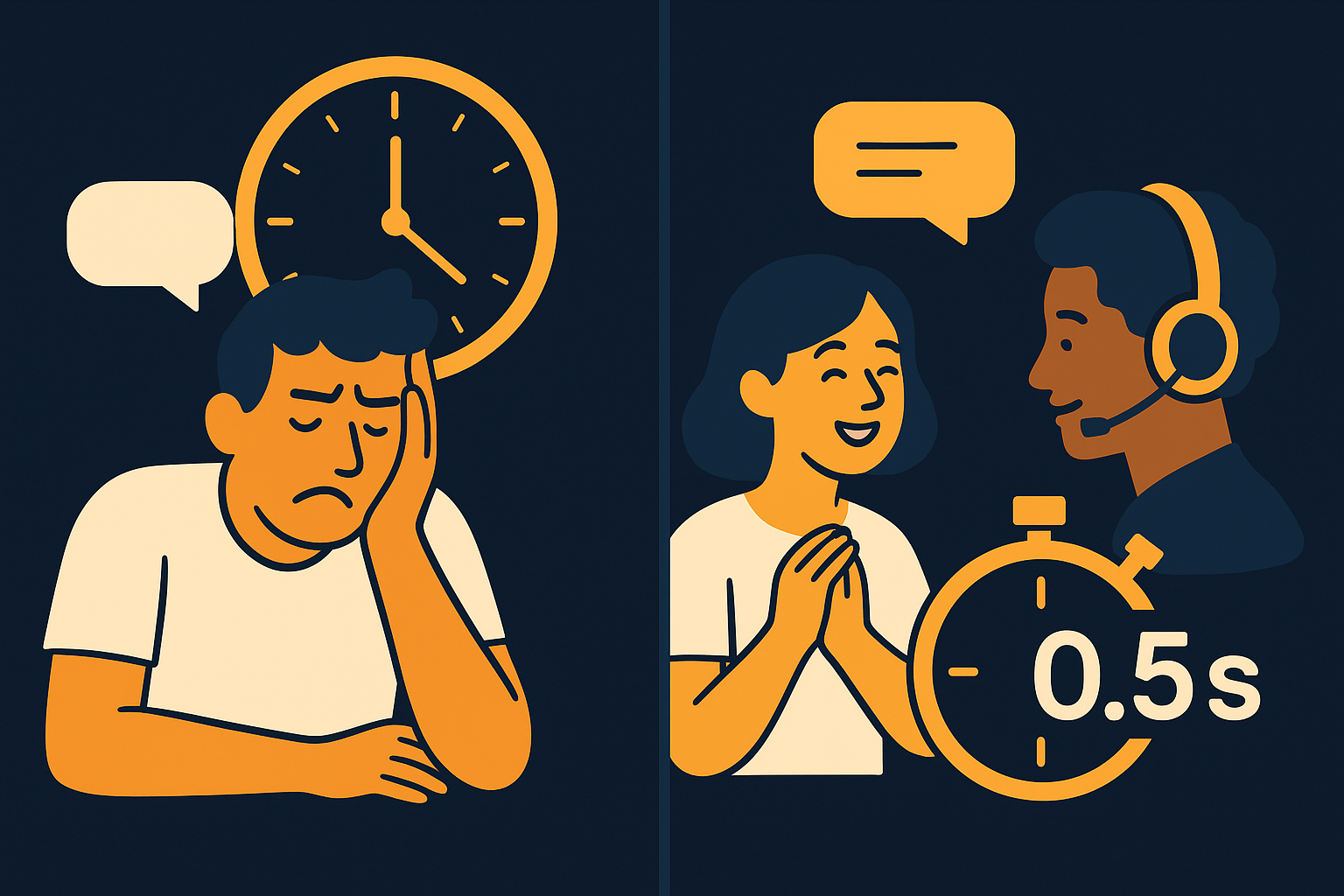
Imagine you run a customer support center that receives hundreds of inquiries every hour. Now picture this: every minute a customer waits for a first response, the risk of dissatisfaction and lost loyalty climbs significantly. Yet, many organizations still struggle with response times stretching into several minutes or more. The real cost of these slow first-response times is often underestimated—it’s not just about keeping customers waiting but about the cascading effects on satisfaction, retention, and operational efficiency.
Why First-Response Time Matters More Than You Think
When a customer reaches out for help, their initial impression hinges heavily on how quickly they receive acknowledgment. Slow initial responses can cause frustration, anxiety, and even drive customers to competitors. In contrast, fast first responses convey attentiveness and build trust from the outset.
The cost of slow responses extends beyond the immediate interaction. Your support team may face higher volumes of repeat inquiries as customers attempt to get updates, increasing workload and delaying resolutions further. This cycle amplifies inefficiencies and costs. Additionally, longer wait times can reduce customer lifetime value, as unhappy customers are less likely to make repeat purchases or recommend your brand.
The Impact of Sub-Second Response Times on Customer Experience
Achieving a first response in under one second fundamentally changes the customer experience equation. When technology allows your team to respond almost instantly, it sets a new standard for engagement and satisfaction. The perception of speed reassures customers that their needs are prioritized and that your service is reliable.
Imagine a customer sending a chat message on your support page. Instead of hearing silence or generic 'we’ll get back to you soon' messages, they receive an immediate acknowledgment, even if it’s an automated confirmation or initial AI-assisted reply. This instant interaction can reduce customer anxiety and prevent them from abandoning the conversation altogether.
Such responsiveness also influences how customers rate their experience. Quick first responses correlate with higher customer satisfaction scores and can indirectly boost brand reputation. Moreover, rapid replies enable faster issue resolutions, freeing up support resources to focus on more complex problems.
Changing the Math with AItocha CX’s Sub-Second Response Capability
Leveraging AItocha CX allows your team to achieve an average first response time of less than one second, a threshold that many organizations struggle to reach. This capability not only minimizes customer wait times but also transforms how your support operations function, enabling a more proactive and efficient approach.
By automating initial interactions and providing intelligent routing, AItocha CX reduces the load on human agents and accelerates response cycles. This shift can lead to fewer repeat contacts, lower escalation rates, and improved resource allocation—all driven by that critical sub-second first response.
To see how this applies in practice, consider a hypothetical support team juggling multiple communication channels. With AItocha CX handling the initial touchpoint swiftly, your agents can focus on delivering personalized resolutions rather than managing queues or sending standard acknowledgments. The result is a smoother customer journey and a leaner support operation.
For more information on how this technology works and can be implemented, you might explore the AItocha CX product page.
Practical Steps to Reduce Your First-Response Time
Reducing first-response time requires a combination of process optimization and technology adoption. Here are some practical steps you can take:
- Evaluate current response times across channels to identify bottlenecks.
- Implement AI-assisted triage to quickly classify and prioritize incoming requests.
- Use automated acknowledgments to instantly confirm receipt of customer inquiries.
- Train support agents to handle common queries efficiently, freeing time for complex issues.
- Continuously monitor performance metrics and adjust workflows to sustain low response times.
Each of these strategies contributes to shrinking the gap between customer outreach and your team’s response, ultimately benefiting your overall customer experience.
Looking Ahead: The Future of Instant Customer Engagement
As customer expectations continue to evolve, the demand for rapid, if not instantaneous, first responses will grow. Achieving sub-second response times is no longer a luxury but a necessity for businesses aiming to maintain competitive customer experience standards.
Technologies like AItocha CX provide a tangible way to meet these expectations by combining AI capabilities with human expertise. This approach allows businesses to not only reduce wait times but also improve the quality of interactions, creating a positive feedback loop for customer satisfaction and loyalty.
Incorporating such solutions positions your support team to handle increasing demand without compromising on responsiveness or quality, effectively changing the equation for customer engagement.