Building a Knowledge Base Your AI Can Truly Understand
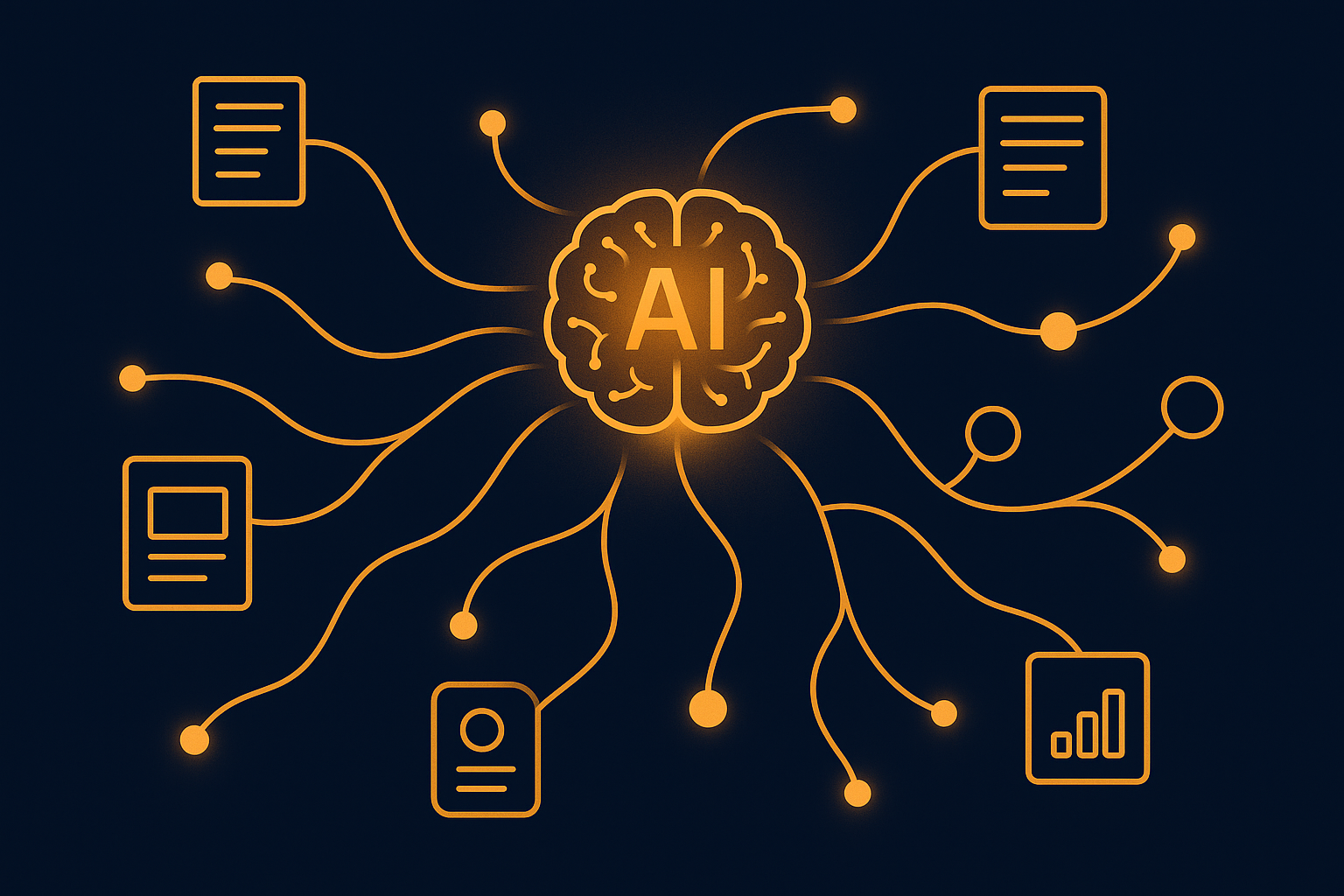
Imagine your support team faced with hundreds of daily customer queries spanning countless topics—from product details to troubleshooting steps. Traditional knowledge bases often act like vast libraries where agents and customers search for answers manually, leading to delays and frustration. But what if your AI could actually understand and use your knowledge base, not just search it? This means moving beyond keyword matching to genuine comprehension, enabling faster, more accurate responses.
Why Traditional Search Falls Short for AI
Typical knowledge bases are optimized for human reading and keyword searches. When AI interacts with them, it often relies on keyword matching or retrieval of documents rather than true comprehension. This limits the AI's ability to provide precise, context-aware responses. Your AI needs more than access—it requires training on the actual knowledge it will use. For example, a customer asking about "return policies" might receive generic instructions if the AI only matches keywords, but a trained AI can infer details like timeframes or exceptions relevant to the user's country or product type. This kind of nuanced understanding is impossible without proper training.
Without being trained on your specific knowledge base, AI systems might misunderstand queries or offer generic answers. This gap between data storage and AI understanding causes inefficiencies and dissatisfied customers. To build a system that genuinely supports your team, your AI must be nurtured on the knowledge itself, not just pointers to where that knowledge lives. A common mistake is to treat AI as a simple search tool, then wondering why it fails on complex queries. Addressing this requires a shift to AI training, enabling it to interpret, cross-reference, and synthesize information effectively.
Training AI Directly on Your Knowledge Base
AItocha CX is designed to be trained on your actual knowledge base, meaning the AI ingests and learns from your content directly. This approach allows the AI to internalize the nuances, terminology, and context unique to your business. Instead of simply retrieving documents, the AI can generate informed, relevant replies that reflect your organization's expertise. In practice, this means the AI can answer complex questions involving multiple topics or steps, like "How do I troubleshoot connectivity issues with product X while ensuring compliance with warranty terms?" Traditional search would struggle here, but a trained AI can parse and integrate the relevant knowledge.
Training AI on your true knowledge assets ensures responses evolve as you update your content. When you refresh policies, product details, or troubleshooting steps, your AI model adapts, maintaining accuracy and consistency. This dynamic learning contrasts sharply with static search databases, which require manual indexing and still lack comprehension. Moreover, regular retraining helps avoid information decay, a common problem with knowledge bases that quickly become outdated, undermining AI reliability over time.
Structuring Your Knowledge Base for AI Use
To maximize AI training benefits, organize your knowledge base with clear, granular, and well-labeled content. Break down large documents into focused sections and tag them with relevant metadata. This clarity helps the AI parse and learn from the material effectively, improving response precision. For example, instead of a long PDF covering all troubleshooting steps, create separate entries for hardware issues, software glitches, and connectivity problems, each labeled with specifics. This approach helps the AI quickly pinpoint relevant information during training and retrieval.
Consider aligning your content structure to common customer questions and scenarios. Group related topics logically and maintain consistent terminology throughout. This structured approach not only aids AI comprehension but also benefits your human agents and customers searching the base themselves. A frequent pitfall is inconsistent naming—using "login error" in one document and "sign-in issue" in another—which can confuse AI models. Standardizing terminology across your knowledge base ensures clearer learning and better AI responses.
Benefits of an AI-Trained Knowledge Base in Support
- Faster, more accurate AI-driven responses
- Reduced workload on human agents by resolving simple queries automatically
- Consistent messaging aligned with your actual knowledge
- Continuous learning that reflects content updates
- Improved customer satisfaction through relevant answers
By training your AI directly on your knowledge base, you empower it to become a responsive, effective teammate. It handles routine inquiries confidently and escalates only when needed, allowing your human agents to focus on complex cases. This synergy enhances overall support quality and efficiency. Imagine a support team juggling five separate inboxes and dozens of ticket types; having an AI that can confidently answer common questions from your knowledge base lightens this load significantly, reducing response times and errors.
Getting Started with AItocha CX and Your Knowledge Base
Integrating your knowledge base with AItocha CX begins with uploading your existing content for model training. The platform processes your materials, enabling the AI to learn context, terminology, and workflows specific to your organization. This tailored training ensures the AI is not just searching but truly understanding your knowledge. In practical terms, this might involve exporting FAQs, manuals, and policy documents into supported formats, then scheduling regular updates so your AI model stays current with ongoing changes in your knowledge base.
Once trained, AItocha CX delivers answers drawn from your authentic knowledge, improving with ongoing updates. If you want to explore how this approach can improve your support, check out the CX product page for more details.
Building a knowledge base for AI use is a strategic shift away from static search toward dynamic understanding. With AItocha CX, your support team gains a powerful tool trained on your actual knowledge, helping you deliver faster, clearer, and more accurate assistance to customers.