Building a Feedback Loop: From Survey Response to Product Improvement
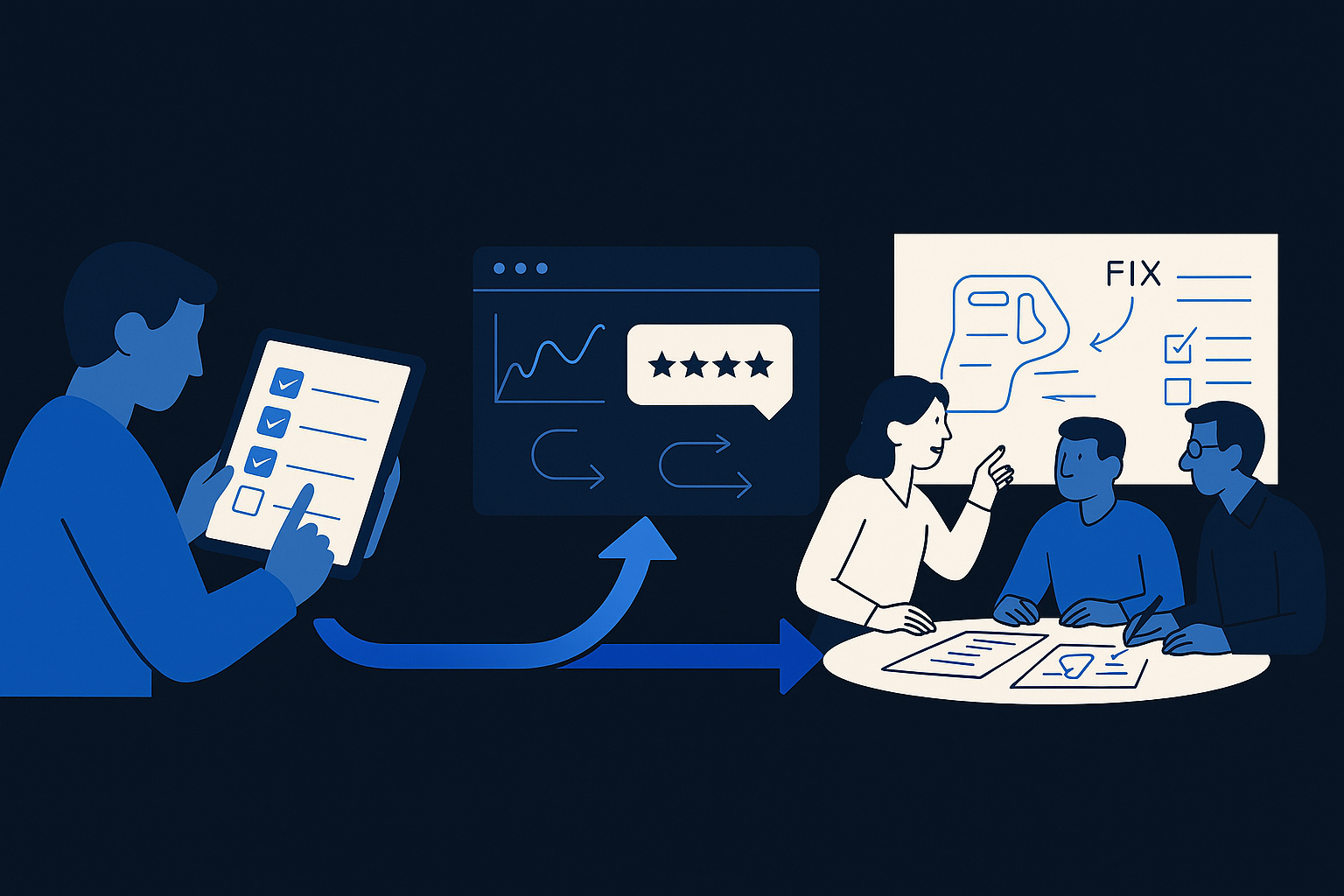
Imagine your customer support team receiving dozens of survey responses every day, but struggling to translate that feedback into meaningful product enhancements or well-placed public reviews. This scenario is common, yet avoidable. Building a structured feedback loop from survey response through to public review and finally product fix is critical for continuous improvement and customer trust. Using tools like AItocha Surveys can help you streamline this process with features such as real-time analytics and review routing, enabling your team to act swiftly and strategically on feedback.
Capturing Feedback Efficiently with Rating-Based Scoring
The first step in any feedback loop is collecting raw input from customers in a way that’s easy to analyze. AItocha Surveys employs an automatic rating-based scoring system that categorizes responses simply based on star ratings. This transparent method groups feedback into positive, neutral, or negative buckets without any filtering or gating. It’s important to invite every respondent to leave a public review regardless of their score, complying with Google’s policies and FTC guidelines.
This approach ensures you receive a balanced view of your product or service rather than just the most favorable opinions. Every low rating triggers an internal alert, allowing your team to promptly address issues before they escalate. For example, if a customer rates a product two stars and submits a comment about a return policy problem, the internal alert lets your team quickly investigate and reach out to improve their experience. By treating all feedback as valuable, your business builds credibility and gains genuine insights for improvement.
Review Routing: Directing Feedback to the Right Channels
After collecting survey responses, the next challenge is routing review invitations appropriately. AItocha Surveys supports sending review requests to platforms such as Google, Facebook, TripAdvisor, Trustpilot, G2, and Capterra. The system does not filter or limit requests by rating, so all customers who opt in receive an invitation to share their experience publicly.
This inclusive routing respects platform policies and ensures transparency. For platforms like Facebook and Trustpilot, the tool can automate posting when connected, simplifying the process. Other platforms provide direct review links emailed to the respondent, allowing them to write their own review. A common mistake is attempting to filter out negative feedback from these invitations; however, AItocha Surveys adheres to guidelines by inviting everyone, which avoids bias and builds trust.
Notably, platforms like Yelp are deliberately excluded because they prohibit solicitation of reviews. This careful selection avoids jeopardizing your business's standing with review sites and ensures compliance. In practice, setting up review routing means you can tailor which platforms receive invitations based on your industry and customer preferences, streamlining the process and maximizing review generation.
Leveraging Real-Time Analytics for Rapid Response
Real-time analytics are essential for monitoring customer sentiment and spotting trends as they emerge. AItocha Surveys offers dashboards that update instantly as new responses come in, enabling your team to track metrics such as average ratings, response volumes, and feedback categories.
This immediacy helps prioritize issues and opportunities, ensuring no critical feedback slips through unnoticed. For example, if a sudden increase in low ratings appears on a particular product line, your team can quickly dive into the detailed comments to identify the root cause before it impacts your reputation further. The ability to visualize data live also supports proactive decision-making rather than reactive fixes.
By visualizing data live, you can quickly identify patterns that suggest product shortcomings or highlight areas excelling in customer satisfaction. The ability to act on current data closes the feedback loop faster, leading to more timely product tweaks and improved user experience. Teams often find that scheduling routine reviews of the dashboard every day or week helps maintain ongoing awareness and responsiveness.
Creating a Continuous Improvement Cycle from Feedback to Fixes
Building a feedback loop does not end with collecting data and reviews—it’s about closing the loop by turning insights into actionable changes. Your team should integrate survey analytics and review content into product planning meetings, prioritizing fixes based on the frequency and impact of reported issues.
- Monitor negative feedback alerts to identify urgent problems.
- Analyze recurring themes in reviews for systemic improvements.
- Use real-time dashboards to track the effectiveness of product changes post-release.
- Encourage cross-team collaboration between support, product, and marketing based on survey insights.
- Maintain transparency with customers by communicating improvements driven by their feedback.
For example, if multiple customers mention difficulties with a user interface element, your product team can prioritize a redesign, then use subsequent survey data to measure if satisfaction improves. Closing the loop also means your customers feel heard, which can increase loyalty and even motivate satisfied customers to post more positive reviews. This ongoing cycle is crucial to evolving your product in alignment with customer needs and expectations.
Practical Tips for Implementing Your Feedback Loop
To put theory into practice, start by defining clear roles for team members responsible for monitoring survey responses, managing review routing, and communicating with product teams. Avoid common pitfalls such as ignoring low ratings or failing to act promptly on alerts. Use AItocha Surveys’ built-in tools to automate routine tasks like review invitations and alert notifications to save time.
Set up regular check-ins to discuss insights gained from real-time analytics and plan product adjustments accordingly. Document your feedback loop process to ensure consistency and scalability as your business grows. Testing different survey question types and timing can also improve response rates and data quality, strengthening your feedback base over time.
Remember, an effective feedback loop is dynamic and requires continuous refinement. The goal is not just to collect data but to create a responsive system where customer voices directly influence product evolution, enhancing satisfaction, and building a sustainable competitive advantage.